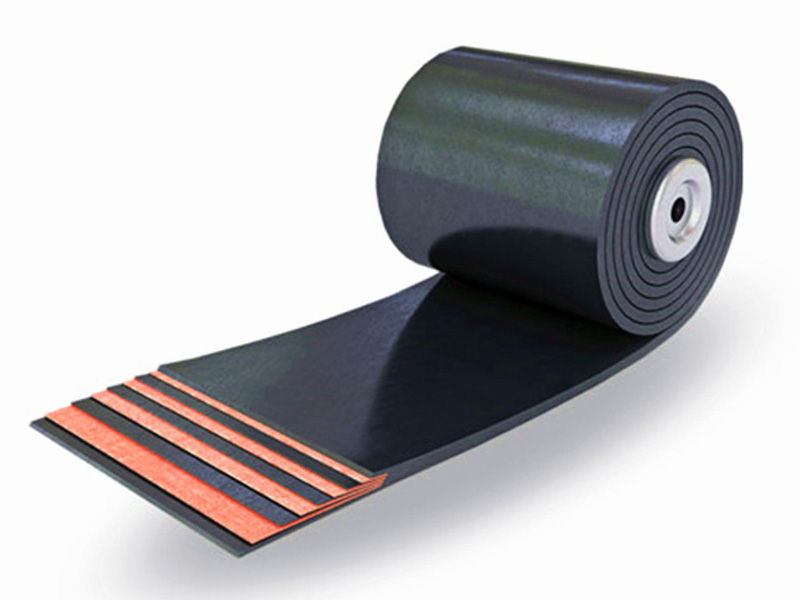
Choosing the correct rubber conveyor belt is critical for efficiency, safety, and cost-effectiveness in material handling. An incorrect selection can lead to premature wear, spillage, and frequent downtime. Follow these key factors to make an informed decision.
1. Understand the Material Being Conveyed (The Most Critical Factor)
The belt must be compatible with the material it carries.
Size & Weight: Is it fine powder, lumps, or large, sharp rocks? Heavier, sharper materials require belts with higher tensile strength and better impact resistance.
Abrasiveness: Highly abrasive materials (like ore, slag, gravel) demand belts with thick, abrasion-resistant top covers (e.g., rubber compounds with high MOA - Modulus of Abrasion ratings).
Temperature: Is the material hot (e.g., sinter, clinker)? Standard rubber degrades quickly. You need a heat-resistant belt designed for specific temperature ranges.
Chemical & Oil Exposure: Oils, fats, or chemicals can swell and degrade standard rubber. For such applications, choose oil-resistant (OR) or chemical-resistant cover compounds.
Angle of Incline: For steep inclines, belts with profiles (chevrons, cleats, or ribs) or a rough top surface are necessary to prevent material rollback.
2. Analyze the Conveyor System & Operating Environment
The belt must suit the mechanical setup and surroundings.
Troughability & Pulley Diameter: The belt must flex properly over idlers and drive pulleys. This is determined by the belt's fabric ply construction and minimum pulley diameter. More plies generally mean higher strength but less flexibility.
Tension & Strength: Calculate the maximum tension the belt will experience. This determines the required tensile strength, rated in PIW (Pounds per Inch of Width) or N/mm (Newtons per millimeter). Common fabric reinforcements include:
Fabric Belts (Multi-Ply): EP (Polyester/Nylon) or NN (Nylon/Nylon) for general use. EP offers better resistance to elongation.
Steel Cord Belts (ST): For extremely long distances, heavy loads, and high tension (e.g., mining, overland conveyors).
Environment: Indoors, outdoors, wet, or cold?
Wet Conditions: Choose belts with mold edges to prevent water ingress into the carcass, and covers with good grip.
Fire Safety: Underground mines or high-risk areas require fire-resistant (FRAS) belts.
Food Handling: Requires FDA/USDA-approved white or light-colored belts.
3. Choose the Correct Belt Construction & Components
A belt is a composite of different layers.
Carcass (Reinforcement): The heart of the belt, providing strength and shape. Choose between fabric (EP, NN) or steel cord (ST) based on your strength and flexibility needs.
Covers (Top & Bottom):
Top Cover Thickness & Grade: Thicker for abrasion; specific compound grades (e.g., AR for Abrasion Resistant, HR for Heat Resistant).
Bottom Cover: Protects the carcass from wear against pulleys and idlers.
Edge & Splice: Consider molded edges for longevity and specify your preferred splicing method (vulcanized or mechanical) with your supplier.
By systematically evaluating these factors, you can select a rubber conveyor belt that ensures optimal performance, longevity, and a strong return on investment for your operation.
Talk to an Engineer
Questions about belt selection, standards or splicing for your application? Send us your operating conditions and an engineer replies within 2 hours.
WhatsApp an Engineer